
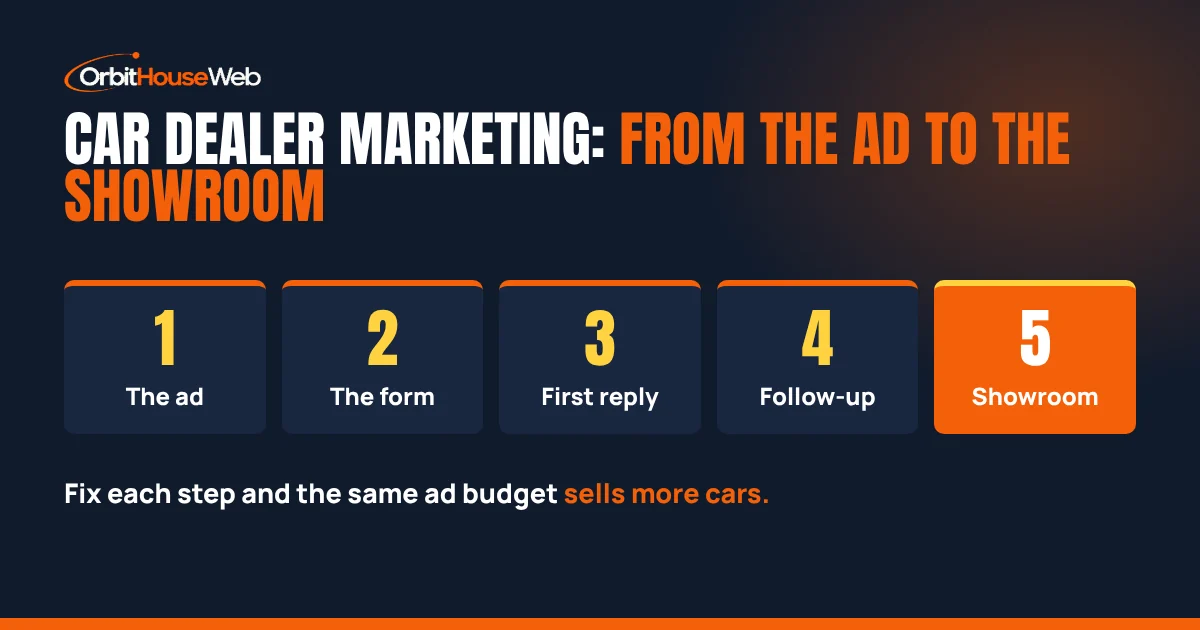
Car Dealer Marketing in 2026: How to Turn Ads Into Appointments and Sales
Most dealer marketing advice stops at the click. This guide follows one lead from the ad to the showroom, and shows where deals get lost.
Read the guideResources/Guide
A shopper fills out your form at 8:47 on a Tuesday night. They're on the couch, comparing three trucks on three dealer sites. Whoever answers first usually gets the appointment. Whoever answers tomorrow morning is talking to someone who already booked a test drive somewhere else.
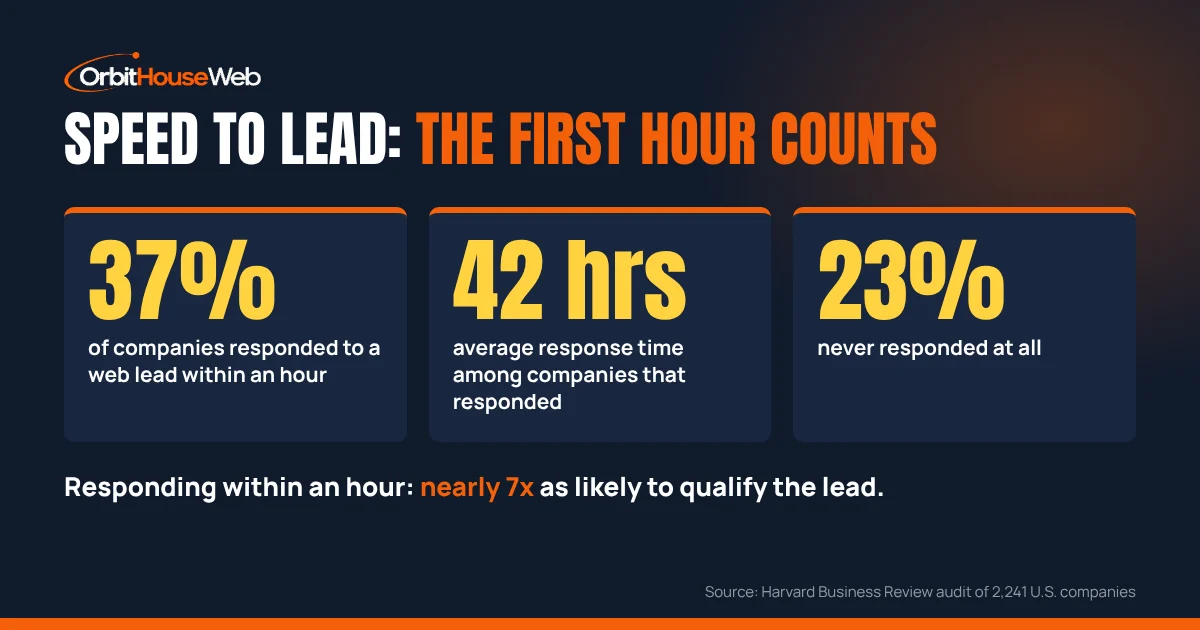
That's speed to lead: the time between a lead coming in and your first real response. It's one of the biggest factors in whether your ad spend turns into sold cars.
A well-known study published in Harvard Business Review audited how 2,241 U.S. companies responded to a web lead. Only 37% responded within an hour. Among companies that responded within 30 days, the average response time was 42 hours, and 23% never responded at all. Firms that reached out within an hour were nearly seven times as likely to qualify the lead as firms that waited even an hour longer (SmartCompany, reporting on the HBR study).
That study wasn't only about car dealers, but the pattern fits what anyone who has worked a dealership internet department has seen. Leads cool off fast, and they cool off fastest when the shopper is still actively shopping.
If your cost per lead looks fine but your cost per car sold doesn't, the problem is usually between the lead and the showroom, not in the ad. For the whole path from the ad to the showroom, read our car dealer marketing guide.
Texting is often the fastest way to reach a shopper, but it comes with rules. Get clear permission on your form before you text, honor opt-out replies like STOP right away, and check the requirements with your compliance team or attorney. Doing it right protects your store and your sending reputation.
This is the problem we built Blast Off to solve. It's a follow-up system for dealerships: Cosmos, its AI assistant, drafts every follow-up, and a person on your team approves each message before it goes out. Blast Off tracks speed to lead and show rate, so you can see exactly where leads are slipping.
We're bringing on a small number of pilot dealers first. If your store is losing leads between the form and the showroom, see how Blast Off works.
Every store will tune this to its own team, but a solid starting plan looks like this:
The plan matters less than consistency. A lead that gets five well-timed touches has a far better chance than one that gets a single call and is forgotten.
Social media shoppers browse at night and on weekends. If your store only responds during business hours, a big share of your leads wait until morning by default. The fix isn't hiring someone to sit by the phone at midnight. It's having an approved first reply ready to go the moment a lead comes in, then having a person pick it up first thing.
Ask about the Blast Off pilot, or have us build the campaigns that feed it.
See Blast OffSpeed to lead is the time between a lead coming in and your first real response. For car dealers, faster response means a much better chance of reaching the shopper before they book with another store.
As fast as possible, ideally within minutes. A study published in Harvard Business Review found firms that responded within an hour were nearly seven times as likely to qualify the lead as firms that waited longer.
It varies by store and lead source, so the best benchmark is your own trend. Track it weekly, and improve it with confirmation messages and reminders before the appointment.
AI can draft fast, personal replies. With Blast Off, Cosmos drafts every follow-up and a person on your team approves each message before it is sent.
Most dealer marketing advice stops at the click. This guide follows one lead from the ad to the showroom, and shows where deals get lost.
Read the guide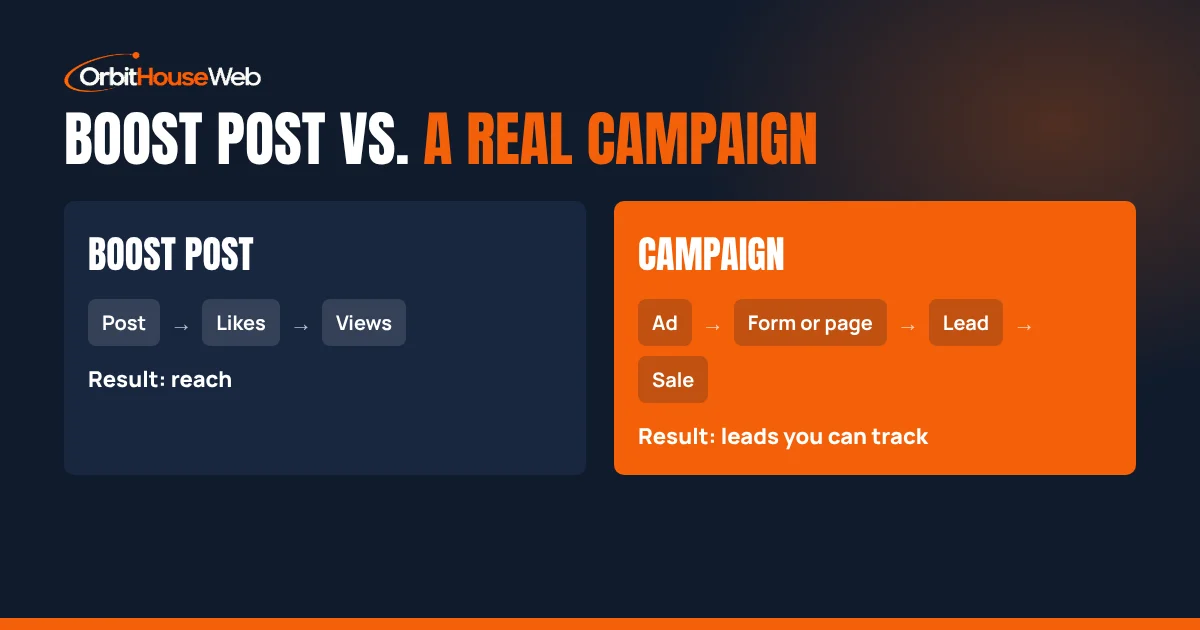
Boosting gets views. A campaign built in Ads Manager gets leads. Here's when each one makes sense for a dealership.
Read the guideTell us what's on your lot and what you want to move, and we'll show you how we'd set it up.
We use cookies to see how visitors use this site. Privacy Policy