
Car Dealer Marketing in 2026: How to Turn Ads Into Appointments and Sales
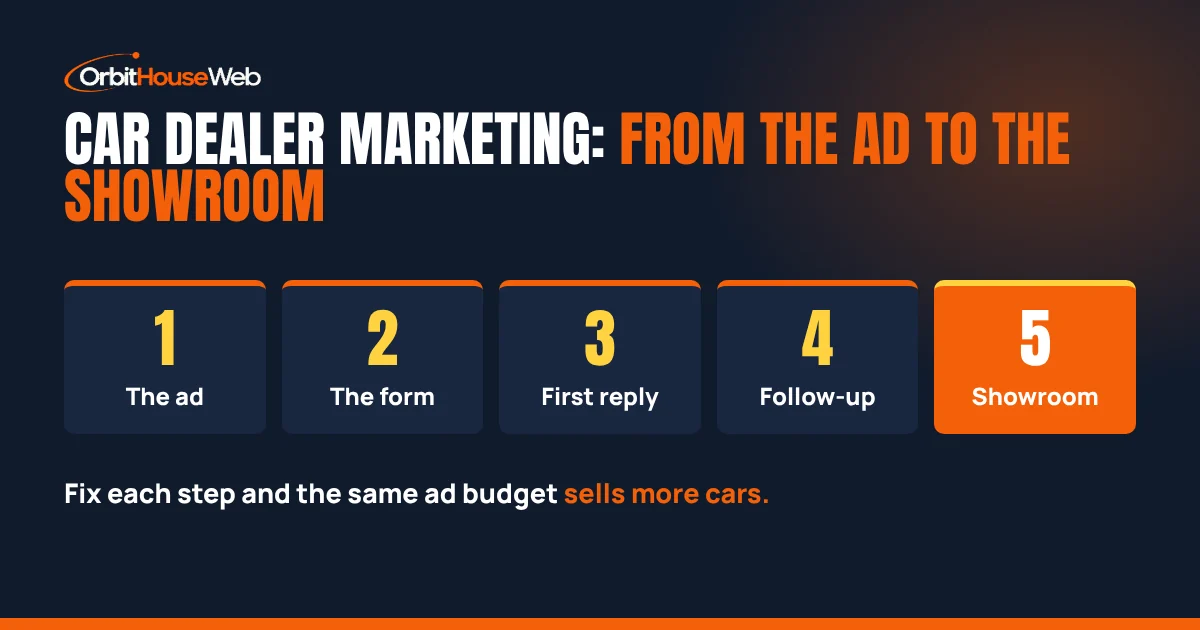
Most dealer marketing advice stops at the click. This guide follows one lead from the ad to the showroom, and shows where deals get lost.
Read the guideResources/Guide
Every dealer campaign has to answer one question: when a shopper taps your ad, where do they go? You have two real choices. A Meta instant form that opens right inside Facebook or Instagram, or a landing page built for that offer. Both work. They just produce very different leads.
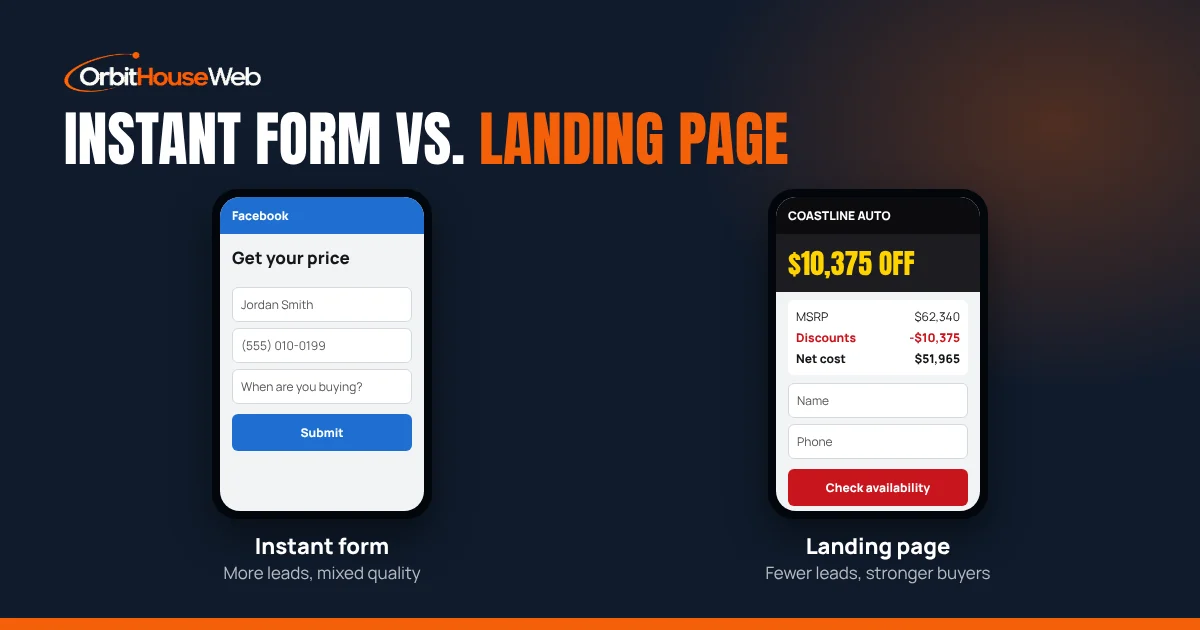
An instant form opens inside the app the moment someone taps your ad. Meta can prefill their name, email, and phone number from their profile, so submitting takes a couple of taps. You can add custom questions, including multiple choice, short answer, and conditional questions that change based on the last answer. A form holds up to 15 questions in total (Relevant Audience).
Meta offers two main form types:
A landing page is a page on your own site built for one offer. The shopper leaves the app, sees the same vehicle and the same numbers from the ad, and fills out a short form or taps to call.
It takes one more step than an instant form, but you control everything on it: the full price breakdown, photos, your disclaimer, trust signals, and a call button that stays on screen as they scroll.
This is the core tradeoff. Prefilled instant forms are so easy to submit that some people do it without much thought, and you get wrong numbers and accidental submissions. A landing page asks a little more of the shopper, so fewer people finish, but the ones who do usually meant it.
That's why cost per lead alone is the wrong scorecard. Judge each option by cost per qualified lead, cost per appointment, and cost per car sold. Our car dealer marketing guide shows how the form fits into the full path from ad to showroom.
| Instant form | Landing page | |
|---|---|---|
| Lead volume | Higher | Lower |
| Lead quality | Mixed, better with Higher intent and a qualifying question | Usually higher |
| Shows the full price breakdown | Limited | Yes |
| Tap to call | Limited | Yes, sticky on mobile |
| Retargeting visitors who don't submit | Limited | Yes, with the Pixel |
| Where leads live | Meta, so connect a CRM or download them | Straight to your inbox or CRM |
You don't have to pick one. The strongest dealer campaigns use both:
The best form in the world doesn't matter if the lead sits for hours. Whichever option you choose, set it up so every lead reaches a person right away:
We build matching ads and landing pages for dealers, with the tracking set up so you see your real cost per lead.
Contact UsYes, for volume. They are fast to submit, which brings more leads but more low-quality ones. Using the Higher intent form type and one qualifying question improves quality.
Landing pages usually convert fewer people but produce stronger leads, because the shopper sees the full offer and chooses to reach out. Judge them by cost per appointment, not cost per lead.
Without a connected CRM, instant form leads can be downloaded for 90 days after submission. Connecting a CRM or lead tool avoids losing them.
Name and phone, plus one qualifying question such as purchase timeline or whether they have a trade-in. Each extra question lowers completion.
Most dealer marketing advice stops at the click. This guide follows one lead from the ad to the showroom, and shows where deals get lost.
Read the guide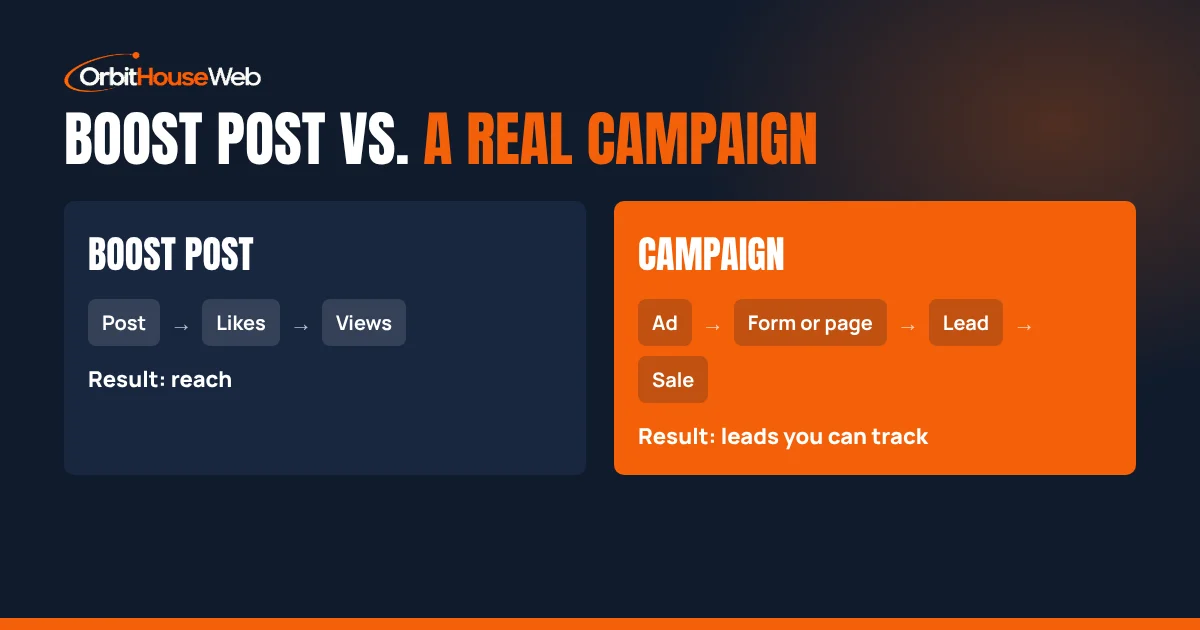
Boosting gets views. A campaign built in Ads Manager gets leads. Here's when each one makes sense for a dealership.
Read the guideTell us what's on your lot and what you want to move, and we'll show you how we'd set it up.
We use cookies to see how visitors use this site. Privacy Policy