
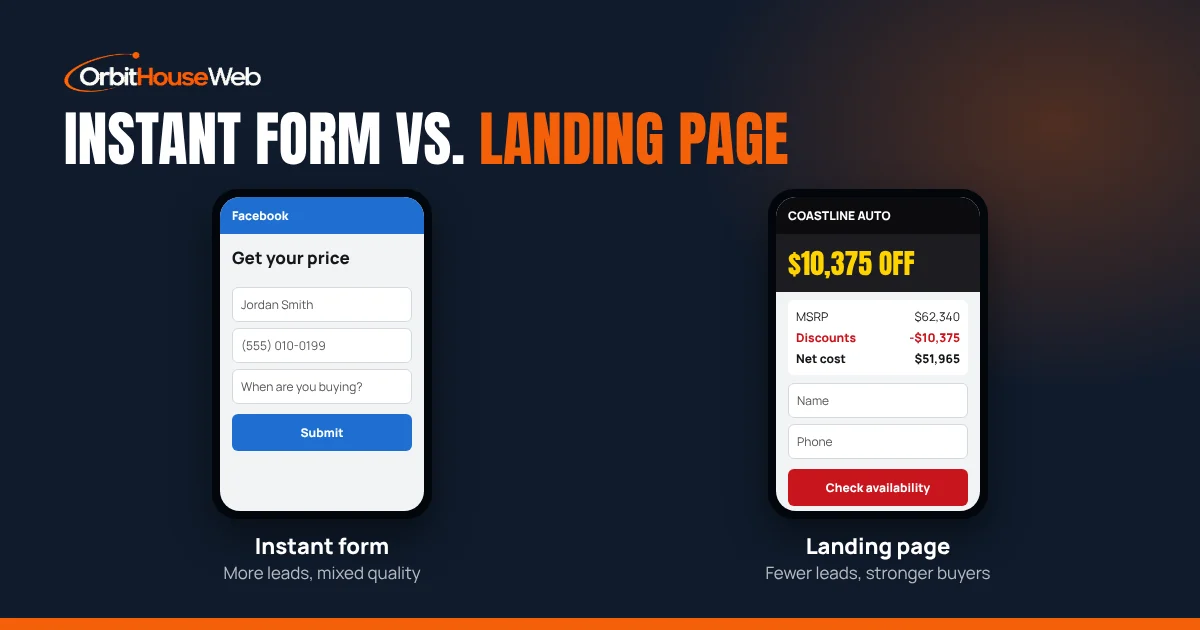
Instant forms vs. landing pages: which gets dealers better leads?
Instant forms win on volume, landing pages win on quality. Here is how to use both in a dealer campaign.
Read the guideResources/Guide
Every GM asks the same two questions before running Facebook and Instagram ads: how much should we spend, and what should a lead cost? Most agencies answer "it depends" and stop there. It does depend, but on things you can work out yourself. Here's how to set a budget that makes sense for your store.
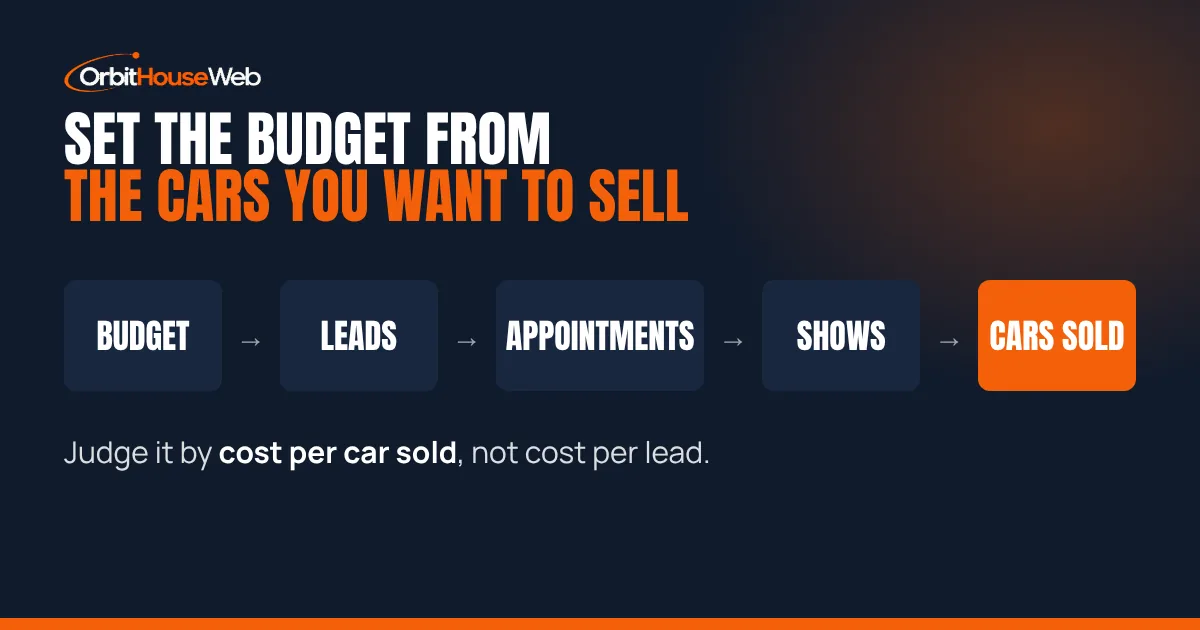
Most dealer ad budgets start with a round number and a hope. A better way is to work backward from what you want to sell:
Your social budget is one piece of your total ad spend. It should earn its share the same way every other source does: by producing sold units you can count.
Published benchmarks for automotive lead campaigns put the national average in the mid-$30s per lead (LocaliQ, Facebook Advertising Benchmarks for 2026). That's an average across many advertisers, not a promise of what your store will pay.
Automotive clicks tend to cost more than many industries, and fewer clicks turn into leads. That's normal for a big-ticket purchase: shoppers look a lot before they raise their hand. It also means what happens after the click matters a great deal. A focused offer and a fast, simple form can make the same budget produce far more leads.
Cost per lead is easy to measure, so it's the number most reports lead with. It's also easy to game. A campaign can drive lead cost down by making the form so easy that people submit without much intent. On a report it looks like a win. In the showroom, your team spends the week calling people who don't remember asking.
A campaign with a higher cost per lead can still sell more cars per dollar if more of those leads pick up, set an appointment and show. The only way to know is to follow each campaign all the way to the sale. We compare the two most common lead paths in instant forms vs. landing pages.
If you've never run lead campaigns, or you're testing a new agency, give it 30 days:
Ask for these every month, from your agency or your own team:
If a report stops at clicks, reach or cost per lead, it isn't telling you whether the money sold cars. That's what our reporting is built around: quality leads and clear numbers you can check.
We'll look at where your leads come from today and what each source produces, free. No contract to sign.
Get a free assessmentWork backward from the cars you want to sell. Multiply the extra units you want from social each month by what you're willing to spend in marketing to sell one car. That gives you a starting budget you can adjust once you see real cost per car sold.
Published benchmarks put automotive lead campaigns in the mid-$30s per lead on average, but your market and offers will move it. A good cost per lead is one that produces sold cars at a cost you're happy with, so compare campaigns on cost per car sold.
Not always. The easiest forms usually bring the cheapest leads, but more of them are low intent and never pick up the phone. Track each campaign through to appointments and sales before deciding which one is better.
Yes. Ads that promote financing or payment offers fall under Meta's Financial Products and Services special ad category, which limits targeting by age, gender and ZIP code and requires a minimum location radius.
Give a new campaign about 30 days with enough budget for a few dozen leads per offer. That's usually enough to compare cost per appointment and cost per car sold, and to move budget toward what's working.
Spend from your own ad account, leads by campaign, how fast leads were reached, appointments set and shown, and cars sold with cost per car sold from your CRM.
Instant forms win on volume, landing pages win on quality. Here is how to use both in a dealer campaign.
Read the guide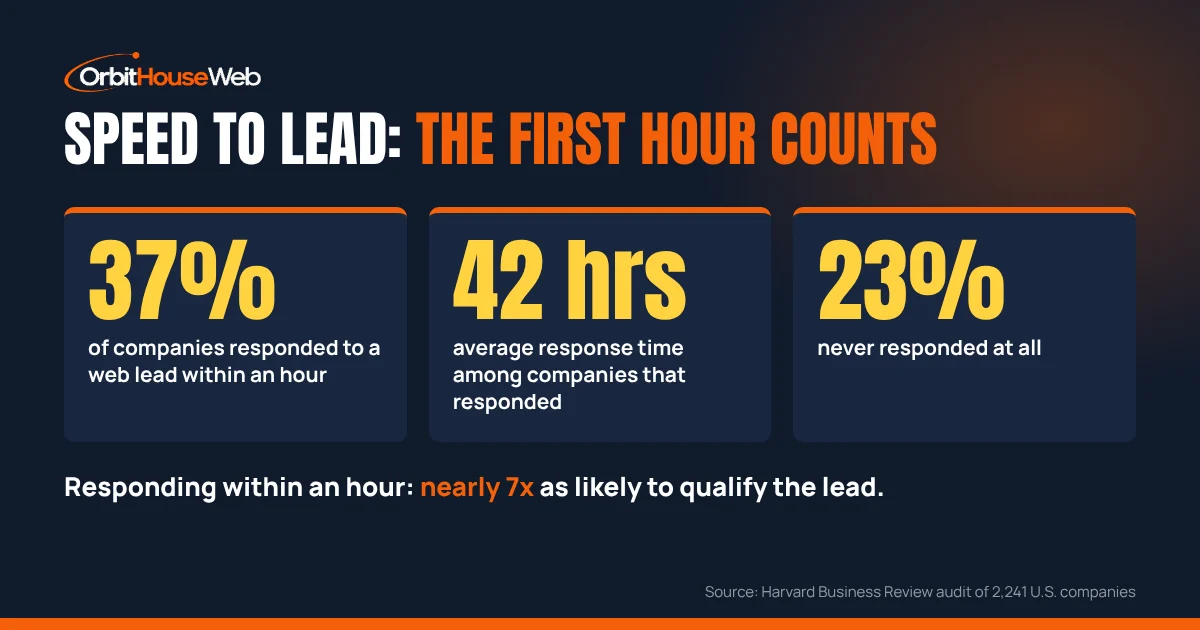
The lead is never hotter than the minute it comes in. What the research says and how dealers can respond faster.
Read the guideTell us what's on your lot and what you want to move, and we'll show you how we'd set it up.
We use cookies to see how visitors use this site. Privacy Policy