
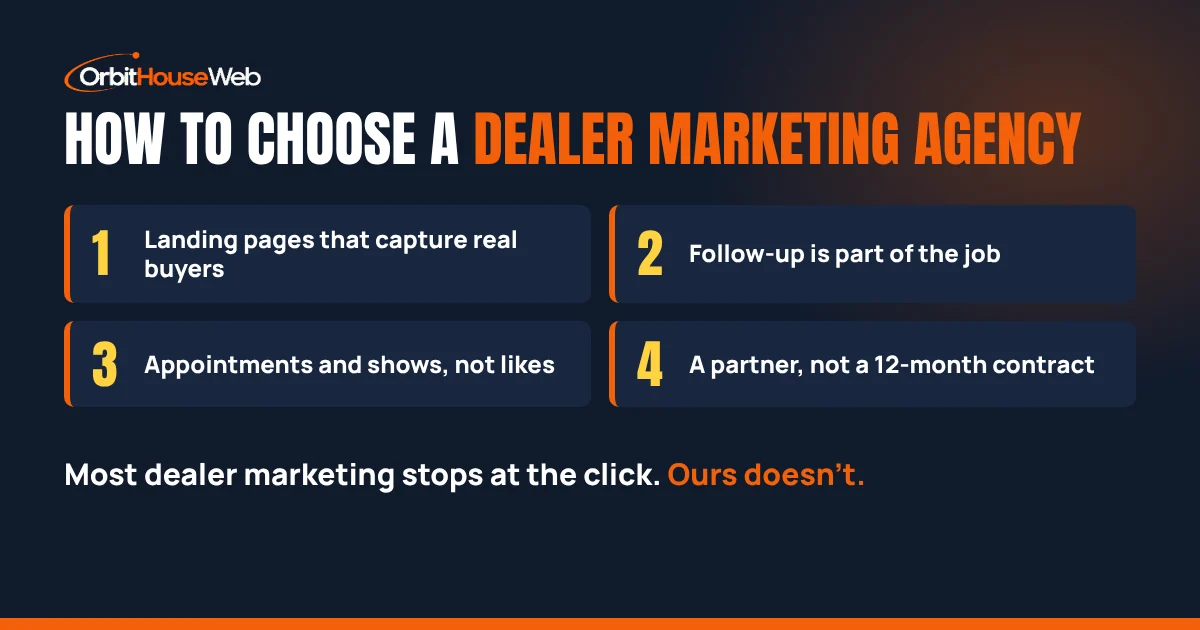
How to Choose the Best Car Dealer Marketing Agency (and What We Do Differently)
7 questions to ask before you hire a dealer marketing agency, and the four things we do that most agencies don't.
Read the guideResources/Guide
You paid to bring that buyer in. Then you parked your car on a page next to your competitor's, handed the shopper's data to someone else's platform, and got a report that says "views are up." That's not marketing. That's rent.
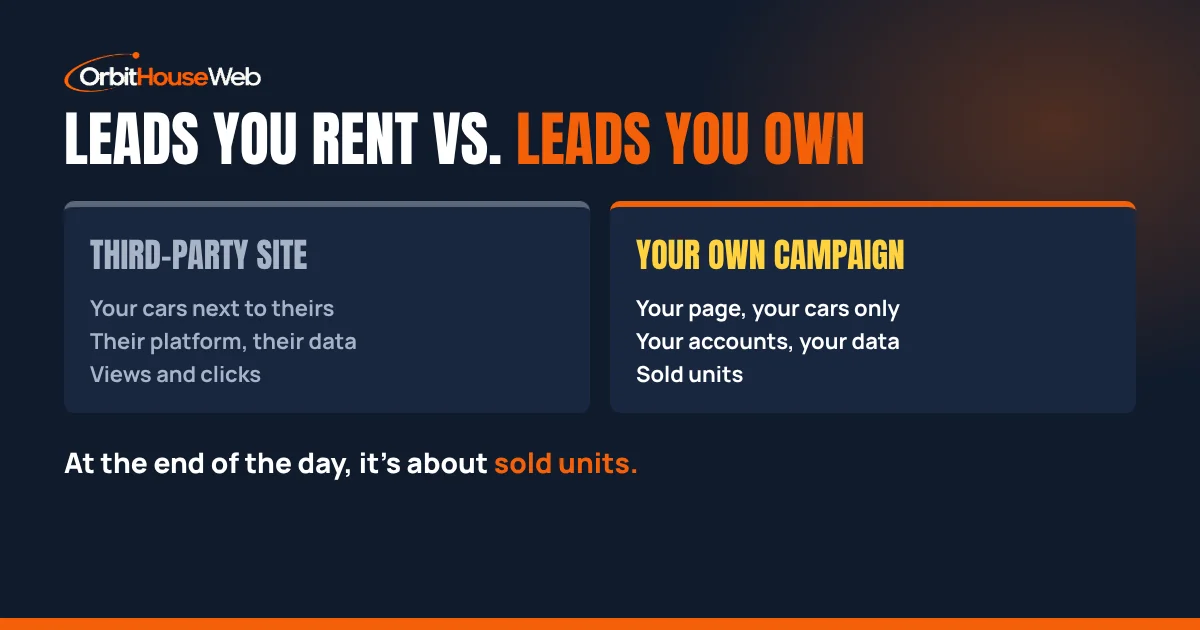
So are third-party leads worth it for car dealers? Only the ones that can prove sold units, and most can't. Here's why.
The listing sites tell their investors exactly what they make from you.
Cars.com: $2,500 per dealer, every month. CarGurus: $8,134 per dealer, every quarter, about $2,700 a month. That's their average across roughly 19,000 and 26,000 dealers. (Cars.com and CarGurus, second quarter 2026.)
That's one site, before the upgrades. Stack two or three of them, add featured placement and the premium badge, and plenty of stores are north of $10,000 a month. Now ask yourself one question: which of those dollars sold a car?
If you can't answer that, you're not buying leads. You're paying a subscription.
Here's the part nobody puts in the sales deck. These sites are built to help the shopper compare you. CarGurus says it right on its own site: it organizes inventory "so you can search across many vehicles in one place."
Read that again from your side of the desk. You paid to get that buyer's attention, and the site's job is to show them every other option first. Your truck sits in a grid next to the same truck from the store across town, with a price badge that can call yours Overpriced. One tap and your buyer is somebody else's appointment.
And the store next to you? Paying the same rent for the same shopper. The only guaranteed winner on that page is the site.
Showing up on that page isn't free, and it isn't fair. CarGurus lists "advertising and enhanced listing placement" right on its own site as part of how it makes money. Featured spots, premium placement, the upgraded badge. If the store across town pays more than you, their car sits above yours.
So what are your options? Pay to play, or cut your price. The sites rate your car against the market, so the lower you go, the better your badge looks and the more you show up. Drop it far enough and maybe you land just under the store that's paying for the spot above you. Drop it a little further and you're losing money on the car just to get seen.
Think about what that means. You're paying the site for the privilege of racing your competitors to the bottom on price, on their platform, with your gross. Some months you win the race and lose money on the deal. That's the game they built.
Now think about the lead that page actually sends you. That shopper found you on a site built to compare prices. They probably picked you because you were the cheapest on the screen. And they sent the same message to two or three other stores while they were at it.
So your salesperson calls, and the first thing they hear is "What's your best out-the-door price?" No loyalty, no interest in your store, just a number to take to the next dealer. If they buy at all, it's a mini deal.
After a few weeks of that, your team stops trusting internet leads. They call once, get voicemail, and move on. Who can blame them? The problem isn't your salespeople. It's where the leads come from.
A buyer who saw your vehicle, your offer, and raised their hand for it is a different conversation. They're not shopping you against a grid. They came to you.
Every shopper who browses your cars on a marketplace makes the marketplace smarter, not you. Cancel, and the leads stop the same day. Everything you paid to build stays with them.
Ask your rep how many cars their leads sold last month. Then listen to the dance.
"Your listings got thousands of views." "Walk-in traffic is up." "Clicks are strong this month." "Shoppers are engaging with your inventory."
Views don't sell cars. Clicks don't sign a buyer's order. "Walk-in traffic" is a guess with a nice chart on it. There is one number that pays your floor plan, and it's sold units. A vendor who can't tie their invoice to sold units isn't selling you leads. They're selling you hope.
Pick your biggest lead source. Pull last month:
The numbers below are made up to show the math. They are not results from a real store.
Say you pay $6,000 and get 120 leads. Fifty bucks a lead. Looks great on their report. Now follow them: 60 answer, 18 book, 10 show, 5 buy. That source just cost you $1,200 a car. Their report will never show you that number. Yours should.
Stop renting space on someone else's lot. Bring buyers to you, with your own placements and your own vehicles, on pages where the only cars they see are yours.
And no, taking it back doesn't mean the wacky inflatable arm guy and free hot dogs on Saturday. It means customers who are yours from the first click, not a name you rented from a third-party classified.
When the customer is yours, you're not racing anyone to the bottom. You can hold gross and sell cars. Nothing wrong with that. That's the business.
Your customers. Your leads. Your advertising.
We came up in a dealership internet department, working the leads these sites sent. That's why we build campaigns the other way around: every dollar you spend builds something that stays with your store.
Here's the full playbook, from the ad to the showroom: car dealer marketing guide.
Nobody's saying cancel everything tomorrow. Some shoppers will always start on a marketplace, and some sources will pass the test. Fine. Keep those. But put every single lead source on the same scorecard, sold units and cost per car, and stop paying anyone on faith.
Start with three questions. Ask them on your next vendor call:
If you get a dance instead of a number, you have your answer. Hold us to the same standard. Here's the list we'd want you to ask any agency, including us.
Tell us what you're spending and where. We'll show you what it would look like if every dollar built something your store keeps.
Contact Us7 questions to ask before you hire a dealer marketing agency, and the four things we do that most agencies don't.
Read the guide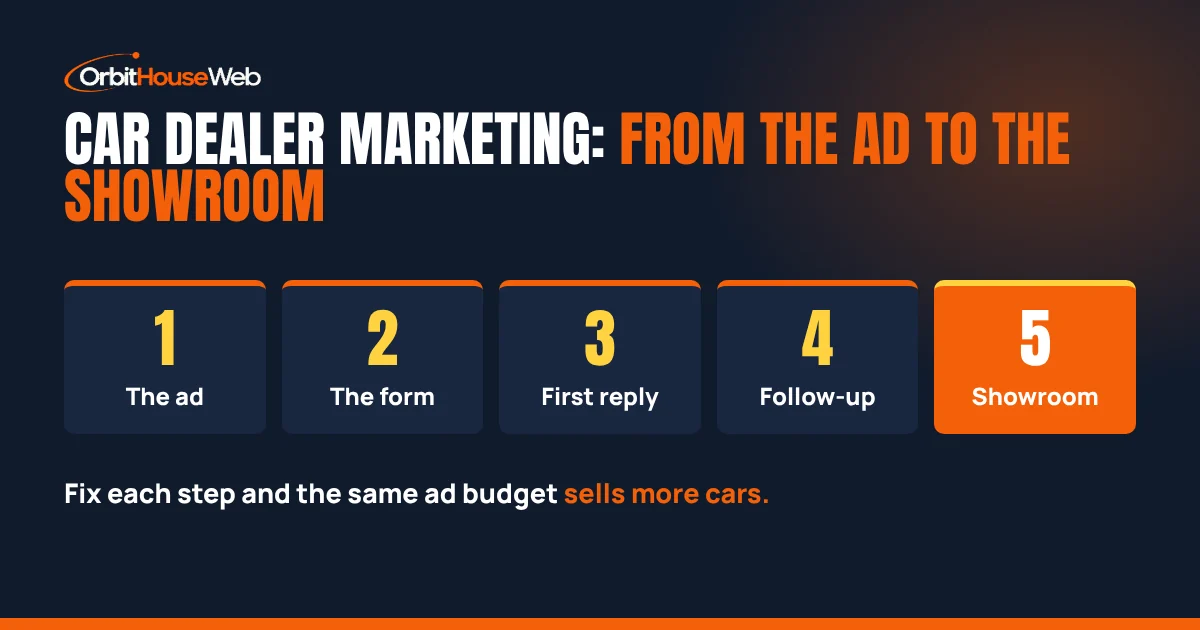
Most dealer marketing advice stops at the click. This guide follows one lead from the ad to the showroom, and shows where deals get lost.
Read the guideTell us what's on your lot and what you want to move, and we'll show you how we'd set it up.
We use cookies to see how visitors use this site. Privacy Policy